
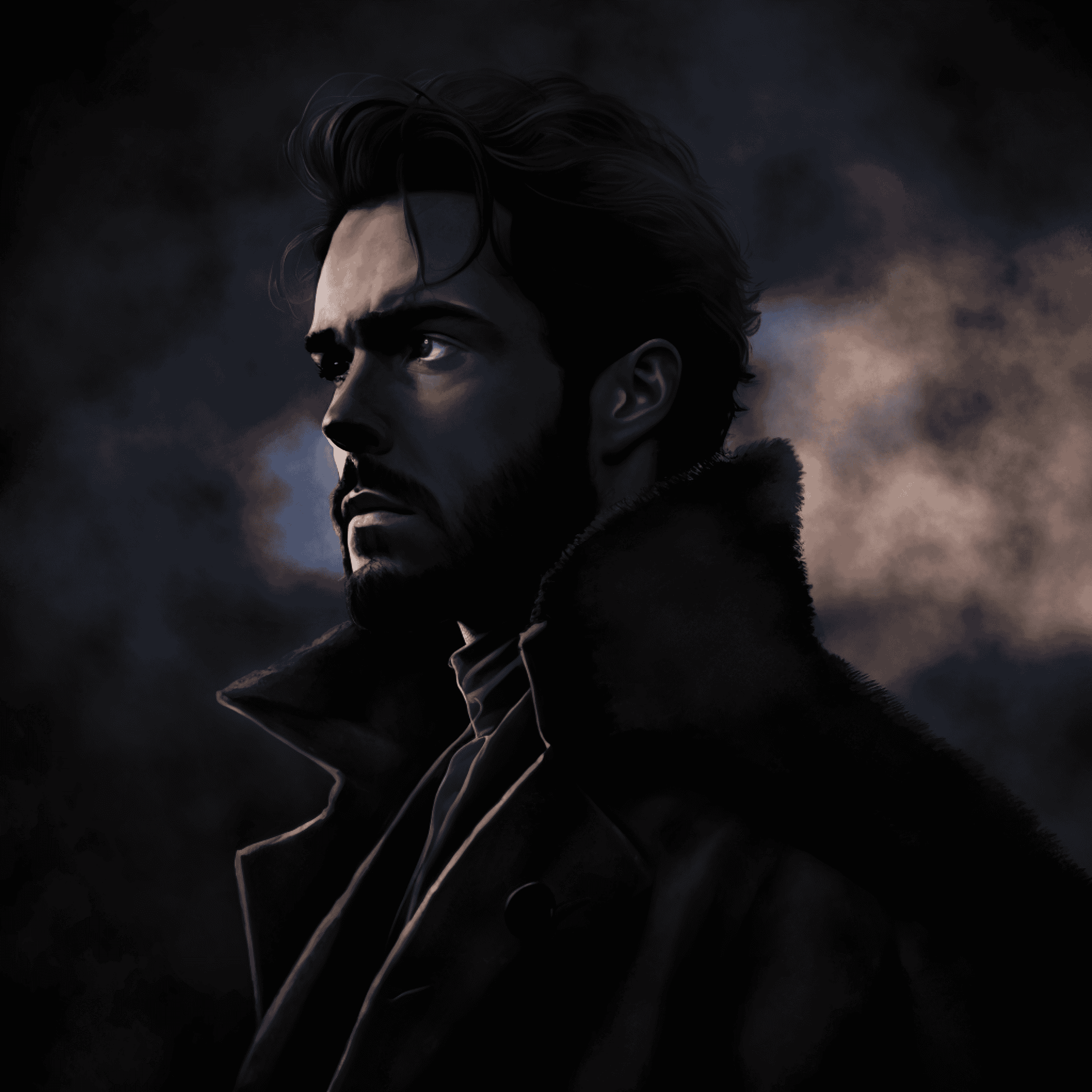
In 1515, a young heir named Charles of Austria, later known as Charles V, assuming suzerainty over the Burgundian crown at 15. By 16, he adorned his realm with the jewels of Spain, rapidly restoring Brussels’ coat of arms, anointing it a capital that hosted the prestigious States General of the Spanish Netherlands. Charles wielded dominion over vast lands, encompassing Italy, the imperial crown of the Holy Roman Empire, and burgeoning colonies in the Americas, forging one of the most expansive empires of his era. Brussels sparkled with newfound prestige.
The city became a beacon, drawing nobles and foreign Cainites. Charles V’s fervent Catholicism hinted at the influence of Lasombra or Ventrue in his circle, with several Lasombras arriving in Brussels during this epoch.
Yet, when Charles V abdicated, latent discontent simmered in the Netherlands and Brussels. The Ventrues of Belgium and Brussels bristled at the clandestine Lasombra presence, triggering a conflict of ambitions that evolved into a religious war.
Brussels witnessed troops marching, from Spanish loyalists to Catholics and Protestants, embroiled in a multi-layered battle for influence. Frederik de Kastelweg, a wealthy Flemish Ventrue, supported the Protestants, with rumours of Toreadors aiding the Flemish Ventrues. Guy of Burgundy seized the opportunity, extending his dominance into Brussels, while Ludmilla’s absence sparked speculation. Some said that she observed the events, others said that she was in slumber or travelling. None can be certain.
The conflict birthed the independence of the Northern Netherlands and part of present-day Belgium, with Brussels resuming its role as the seat of government of the Spanish Netherlands.
Unbridled Desire
In the bustling streets of Antwerp, the de Kastelweg family prospered as influential merchants. My father, Dirk, traded in treasures from the farthest corners of the world. Exotic spices from India, opulent silks and velvets from Italy and precious metals from Liège filled our coffers. We revelled in opulence, but there was a darker lure beneath the surface.
I received a relentless early education, which enabled me to speak seven languages fluently. Adorned in extravagant clothing, our family was a symbol of elegance. I reveled in decadence, savoring nights of intoxicating pleasure, where our well-coiffed appearances and outrageous games knew no bounds.
However, our fortunes took a dark turn when the sinister shadow of syphilis fell on my eldest brother, Kruif. His life ended by his own hand, and I was the first to discover his lifeless body at the end of a rope. The haunting image of his lifeless body still torments my memory.
Kruif’s tragic disappearance placed me in the role of the family’s last hope. My father, fearing my inclination towards the clergy, tried in vain to guide me. Nevertheless, I embarked on a spiritual pilgrimage to Rome in 1517.
There, on the cobbled streets of Wittemberg, I came upon a crowd outside the Church of All Saints, where Martin Luther’s 95 theses were being fervently distributed. With eyes aflame, I read Luther’s radical proclamations aloud to the enthusiastic congregation.
8. The penitential canons apply only to the living; and according to them, nothing should be imposed on the dead.
10. Priests who, at the point of death, reserve the penitential canons for Purgatory are acting badly and unintelligently.
13. Death frees us from everything; the dying are already dead to the canonical laws, which no longer apply to them.
19. Nor is it proven that all souls in Purgatory are perfectly assured of their beatitude, although we ourselves are fully assured.
22. For the Pope would not hand over to the souls in Purgatory any punishments other than those they would have had to suffer in this life by virtue of the canons of the Church.
It was an awakening, a revelation that transformed the very essence of my being. My brother was not going to burn in the flames of hell.
Back in Antwerp, I devoted myself to the cause of the reformers. The winds of change were blowing across Europe, and the de Kastelweg family recognized the immense potential of this religious revolution. The Protestant Reformation, a thundering upheaval of faith and ideals, became the beacon guiding my ambition and dark destiny.
The seismic year of 1695 unleashed another cataclysm: under Spanish rule, Brussels faced a brutal siege by Louis XIV. The Toreadors, operating beneath the French king’s mantle, aimed to cripple the Ventrues of Belgium, whispering of clandestine deals involving Rubens’ works. Charles V’s reign, the Brussels siege, and cainite intrigues left an indelible mark where power, ambition, and the struggle for domination unfolded against a backdrop of history both mortal and immortal.
SOL FRACTA // IN DEVELOPMENT
Join the Future Signal.
No release date yet. But when something moves — you’ll know first.

 English
  French
Leave a Reply