
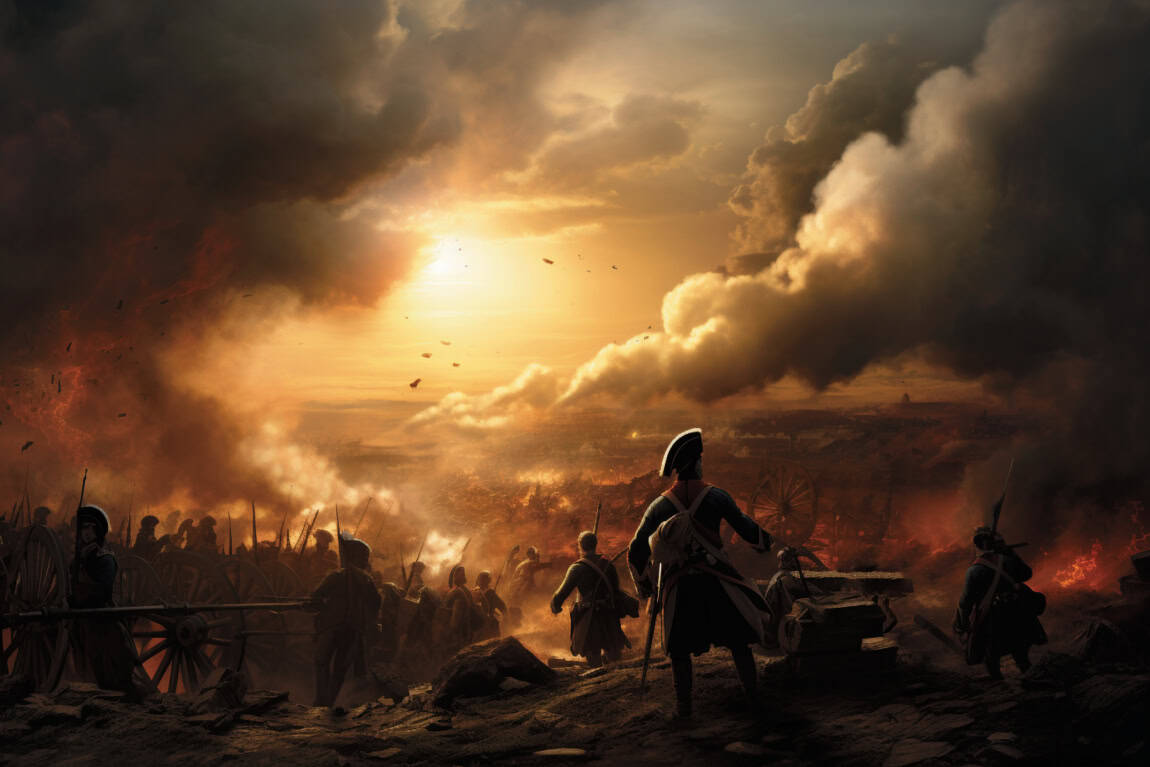
In the tumult of 1789, Brussels’ weary citizens, guided by Ludmilla van der Holst and the indomitable Guy de Bourgogne, rallied for independence against Austrian domination. Belgian cainites orchestrated secret machinations, pushing the mortal population to defy occupation.
The people’s cry led to the 1790 Declaration of Independence and the birth of the United Belgian States. Yet, Austrian force extinguished the flame just 11 months later. In 1792, French revolutionary troops entered Brussels, initially hailed as liberators from Austrian tyranny.
Hope turned to disillusionment as the French established a new yoke of oppression. Once champions of freedom, they became marauders, fueling resistance. Ludmilla and Guy, influential and cunning, joined forces against occupiers, manipulating the revolution for their advantage.
Control oscillated between Austrian and French domination, plunging Brussels into uncertainty. French cainites seized the chaos, posing as revolutionaries to extend influence into Brussels.
Amidst the turbulent days of the First French Empire and Emperor Napoleon’s reign, Brussels experienced a renaissance, becoming an economic powerhouse. Prosperity surged through the city’s veins, fueled by Napoleon’s embargoes against England that inadvertently boosted local production in textile and chemical markets.
In 1801, Napoleon bestowed upon Brussels a cultural gem – the future Royal Museum of Fine Arts. Within its walls, countless works from the Louvre found a new home, guarded by the illustrious Brussels Toreadors. While the clan wanted to grow their ranks and their first choice was the captain Sebastian Lacroix, the Ventrue had different plans and the captain was stolen and was not seen since then.
The Beryns, the minor family of Giovanni clan offshoots from Flanders, rooted themselves in Brussels, leaving an indelible mark on finance and commerce. Their trade routes facilitated the covert importation of psychotropic substances into Brussels, a practice persisting into the 19th century. Yet, the Beryns remained reclusive, posing as Ventrues to the uninitiated.
Change loomed as echoes of the past reverberated through cainite society. After the French defeat at the Battle of Waterloo, Belgium fell under Dutch rule, making Brussels the second capital. Resilient and adaptable, the city stands at a new crossroads, where history and destiny once again intersect.
SOL FRACTA // IN DEVELOPMENT
Join the Future Signal.
No release date yet. But when something moves — you’ll know first.

 English
  French
Laisser un commentaire