
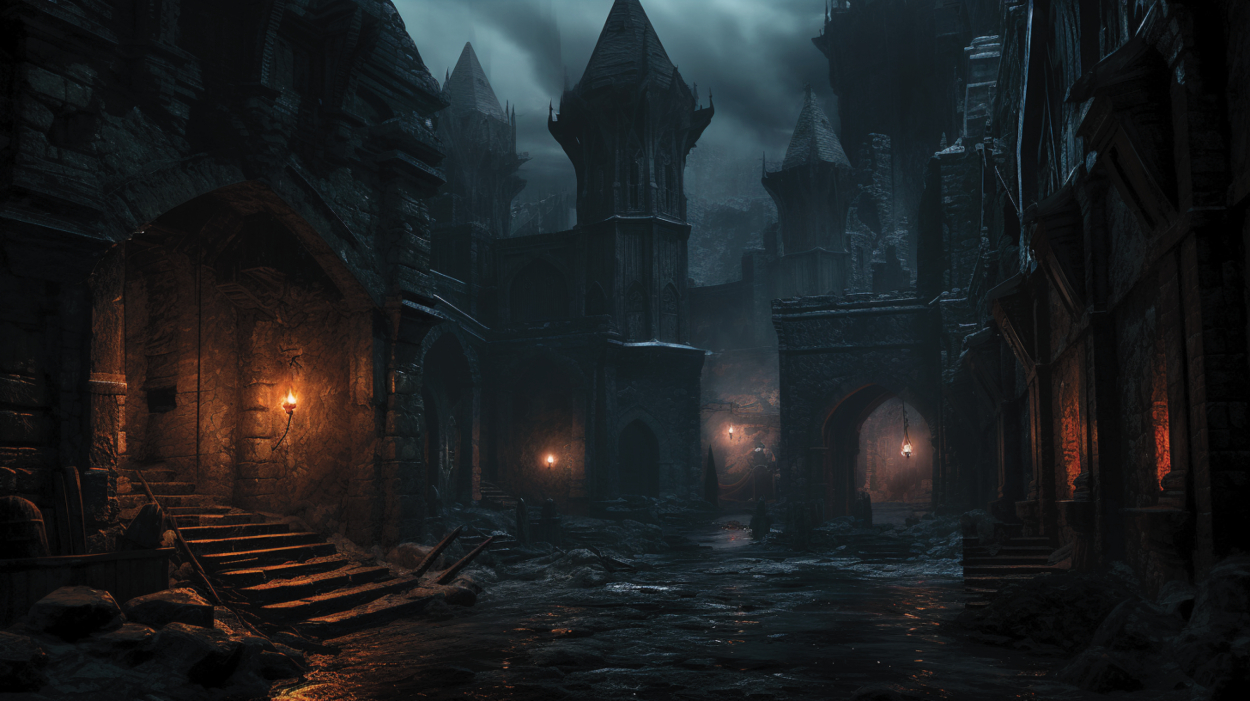
In the heart of the Carolingian era, a great boom in prosperity marked the region’s history. Brussels’s strategic location in the Empire of Charlemagne made it a hub of commerce and culture.
Ships glided along the Scheldt, Meuse, and Rhine rivers, laden with treasures. The clergy flourished, bringing not only spiritual guidance but also economic and educational riches.
Major cities, including Brussels, began to emerge. While its roots trace back to 979, the name “Brussels” was officially born in 1047. The introduction of the three-year crop rotation and the advent of water mills transformed the land, attracting both civilization and, of course, kindred.
Among those who settled here were Ventrues, who established themselves near cloth merchants and bustling markets. Toreadors graced the city with their artistic flair, and a few Brujah and Gangrel, crossing the Rhin from the east, added their unique presence. The Brujahs quickly established themselves around certain towns in Flanders, and sometimes ran some of them.
The passing of Charlemagne and the poor rule of his son, Louis the Pious, marked a turning point. The once-unified empire crumbled into three parts, and Belgium itself was split in two.
The age of turmoil descended upon this land, shaped by Viking incursions, regional instability, and political intricacies.
SOL FRACTA // IN DEVELOPMENT
Join the Future Signal.
No release date yet. But when something moves — you’ll know first.

 English
  French
Laisser un commentaire