
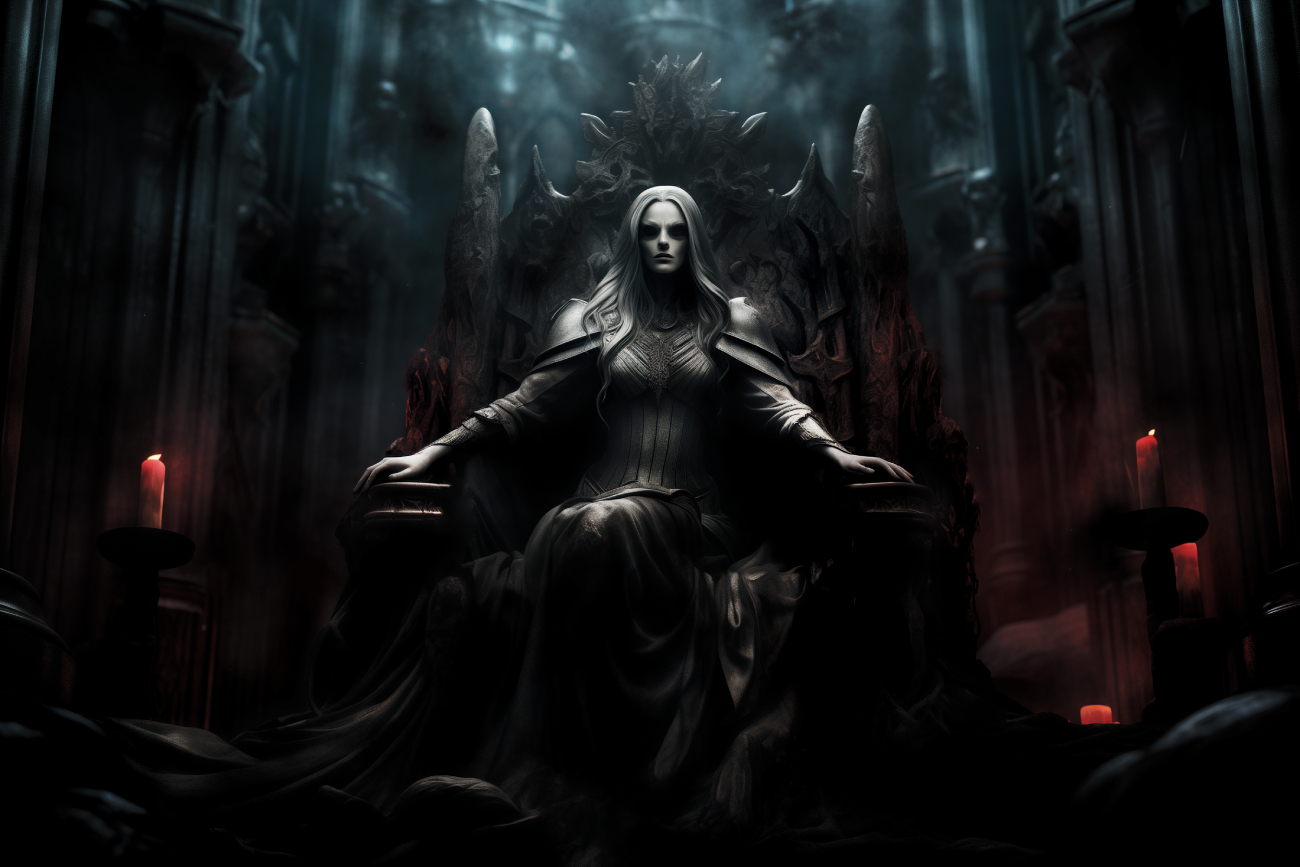
Belgium’s history traces its origins to antiquity. Once Gaul, it evolved into Gallia Belgica under the reign of the Roman Empire. But this tale isn’t limited to mortals alone. Millennia ago, Kindred set foot on this ancient land, and amongst them, a legend was born.
Ludmilla van der Holst, most certainly an assumed name, left her indelible mark on history. A Methuselah of at least two millennia, her power rivals that of the Antediluvians. It’s said their generation is close to the mythical Cain.
The Methuselah’s blood is both feared and coveted, capable of bestowing incredible power. Yet, ingesting her soul is a perilous venture, for madness dances on the precipice. Is Ludmilla a scion of Malkav himself, or do some see her as a deity in her own right? In either case, her powers approach those of a demigod.
Belgium’s history is woven with the legacy of Ludmilla van der Holst, a tale of power, eternity, and the blurred lines between myth and reality.
Ballad of Viradectis
At a time when the clash of swords, the echo of war cries and the rumble of carnyxes filled the air, a mortal named Viradectis rose from the heart of the future Gallia Belgica. Of legendary stature, she established herself as the guardian and defender of her people against the relentless tide of Germanic invaders.
In the midst of this age-old struggle, Viradectis was the symbol of unshakeable determination, her saber gleaming with the ardor of a warrior. The Belgae, immersed in ceaseless war, found comfort and inspiration in the presence of Viradectis, whose name echoed through the valleys and forests as a symbol of resilience.
It was during a decisive battle against Germanic forces that Viradectis, like a storm in human form, confronted her designated adversary. The battlefield trembled under the weight of their conflict and the air crackled with the intensity of their duel. As fate would have it, Viradectis fell to a merciless blow, an axe piercing her chest.
Yet, at the moment of her mortal sacrifice, a divine intervention or miracle occurred. Viradectis, lying on the sacred soil of her beloved land, smiling, felt the taste of iron dropping into her mouth, a taste both horrifying and invigorating. The veil between worlds lifted and visions flooded her mind, revealing ancient stories and glimpses of realms beyond mortal comprehension.
Miraculously, Viradectis came back to life, her once bright hair turning white, bearing witness to the divine revelations she had witnessed.
When Viradectis rose from the ashes, the Belgae tribes witnessed her resurrection and hailed her as a goddess touched by divine forces. The warrior goddess of Gallia Belgica became a venerated figure, associated with the protection, prosperity and bravery of the Belgae people.
The myth of Viradectis spread through the winds, carried by sailors and travelers who unknowingly carried her divine aura to distant lands. Her influence has transcended mortal boundaries, weaving her presence into myths and legends.

📨 Enjoyed this? Start your TTRPG journey for free
Get Hubris at Fort-Graven delivered to your inbox
A complete TTRPG one-shot for beginners. Free. No catch.

 English
  French
Leave a Reply to What’s Brussels By Night? – Zero CooldownCancel reply